

Main Brands:
Bently, Triconex, Woodward, Foxboro, Westinghouse, Reliance, Schneider, Modicon, ABB, Allen-Bradley, Motorola, GE, Yaskawa, Bosch Rexroth, ACSO, YOKOGAW, NI, ICS Triplex, Kollmorgen, Mitsubishi, MOOG, Emerson, B&R, SST, ALSTOM, EPRO, HIMA, HONEYWELL prosoft, AMAT.
Wei Xiu zhu
WhatsApp:+852 5796 0986
Wechat:13395077993
Zhejiang Yiwu Beixun Automation Technology Co., Ltd
China (Zhejiang) Pilot Free Trade Zone, No. 2 Chunpai Road, Beiyuan Street, Yiwu City, Jinhua City, 7F 7059
Website:www.bxplc2.com
Email:3076784238@qq.com
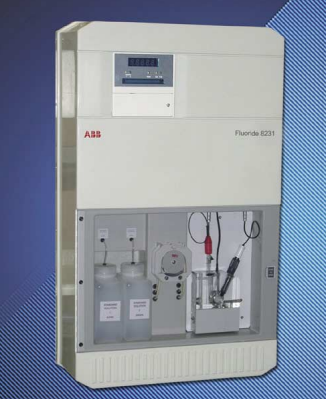
ABB 8231
Technical Documentation
8231 Analogue Input Module
Product Code: 8231
Advant Controller Series
Revision: 3.2
General Description
The ABB 8231 is a high-performance analogue input module designed for the Advant Controller series. It provides precise measurement and signal conditioning for a wide range of industrial process variables, ensuring reliable data acquisition in demanding automation environments.
Related series:
ABB PP886 3BSE092980R1
ABB CI867K01
ABB NGC8206
ABB ABB NGC8206
ABB 1MRK000614-ABR09
ABB 1VCR000882
Key Features
- 16-channel analogue input module
- Universal input types (voltage/current/RTD/thermocouple)
- High-resolution 16-bit A/D conversion
- Galvanic isolation between channels
- Automatic signal scaling and linearization
- Diagnostic capabilities with LED indicators
- Hot-swappable design
Technical Specifications
| Power Supply: | 5 VDC from controller |
| Power Consumption: | Max 1.5 W |
| Operating Temperature: | 0°C to +60°C |
| Storage Temperature: | -40°C to +85°C |
| Humidity: | 5% to 95% non-condensing |
| Dimensions (HxWxD): | 120 x 40 x 160 mm |
Input Configuration
| Input Type | Range | Resolution | Accuracy |
|---|---|---|---|
| Current | 0-20 mA, 4-20 mA | 16-bit | ±0.1% of range |
| Voltage | 0-10 V, ±10 V, 0-5 V | 16-bit | ±0.1% of range |
| RTD | Pt100, Pt1000, Cu50 | 16-bit | ±0.2°C |
| Thermocouple | J, K, T, E, R, S, B, N | 16-bit | ±0.5°C |
Electrical Isolation
- Channel-to-channel: 500 V AC
- Channels to backplane: 1500 V AC
- Input circuits: Galvanically isolated
- Common mode rejection: >100 dB

Leave a comment
Your email address will not be published. Required fields are marked *